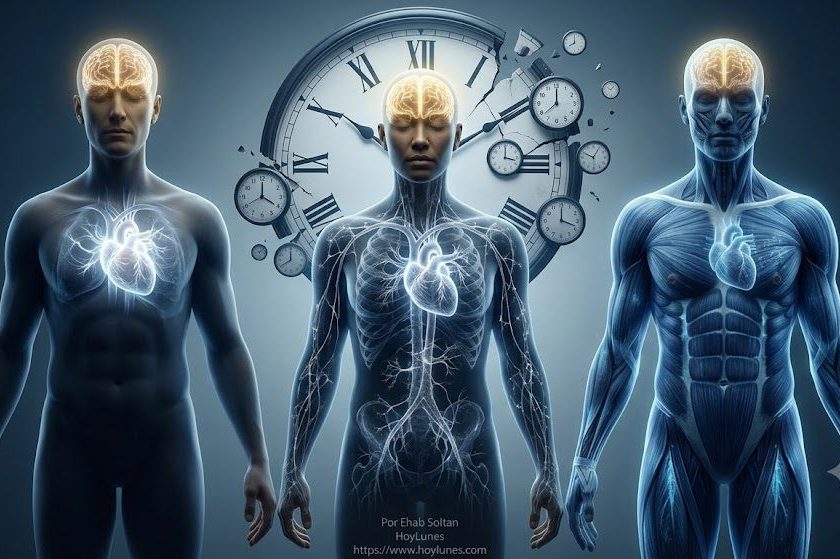
It was not a lack of willpower. It was something already in motion.
By Ehab Soltan
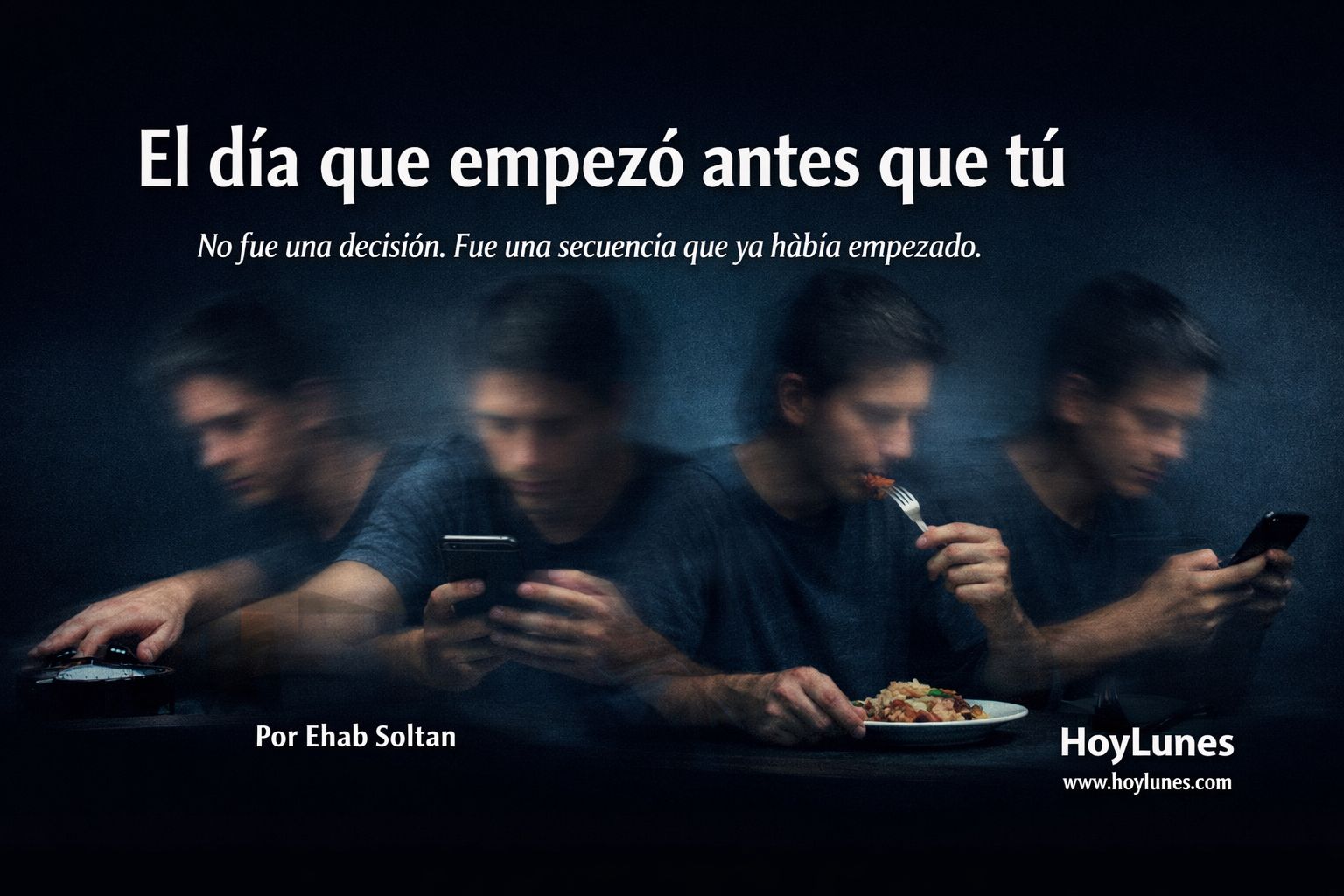
HoyLunes — At 7:13 in the morning, your hand finds the snooze button. There is no deliberative process, no weighing of pros and cons. It is a dry gesture, a motor response that occurs before the “self” finishes waking up.
At 9:02, you find yourself with your phone in your hand. You don’t remember unlocking the screen, nor what exactly you were looking for, but there you are, scrolling with your thumb in a rhythmic fashion.
At 14:26, facing your plate, you chew on something you had sworn to avoid this morning.
At 23:48, you tell yourself: “just one more video”. And without a conscious decision being made, you lose an hour of sleep that you will try to recover tomorrow with coffee. And tomorrow you will say it was a lack of discipline.
The unsettling part is not the failure. Because in that moment you do not feel weak: you feel trapped in something that already started without you. None of those actions began there.
The Illusion of Command
We have built a comforting narrative: the idea that we are captains on the bridge, evaluating options in real time, correcting the course with every conscious thought. We believe that life is a succession of choices.
But that sense of control is beginning to crack.
Modern neuroscience, through the framework of Predictive Processing, suggests something much harder to swallow: the brain is not a spectator waiting for the world to happen in order to react.
The brain has already anticipated.
What you call a decision arrives late. It is the execution of something that was already decided beforehand.
Your brain does not seek to be right. It seeks not to be surprised. And the most efficient way to do that is to repeat what it already knows, what has already worked to keep you alive until today—even if that which “works” is exactly what is wearing you down.
The Conflict Is Not Moral. It Is Structural.
We have been taught to interpret our relapses as weaknesses of character. If you don’t go to the gym, if you eat out of anxiety, if you postpone what is important, you tell yourself you lack discipline. You blame yourself.
But if behavior is, for the most part, an automated prediction, the problem stops being ethical and becomes structural. You don’t eat that breakfast by chance. You don’t look at your phone by accident. You don’t sabotage yourself because you are weak. You are simply operating within something that has already learned to decide for you.
It is not just behavior: it is accumulated fatigue, tension in the body, decisions that end up affecting your health without you remembering having made them. What you repeat without thinking does not remain a mental abstraction; it ends up being written, gram by gram, into your own biology. That is why you don’t remember at what point your life started to feel this way.
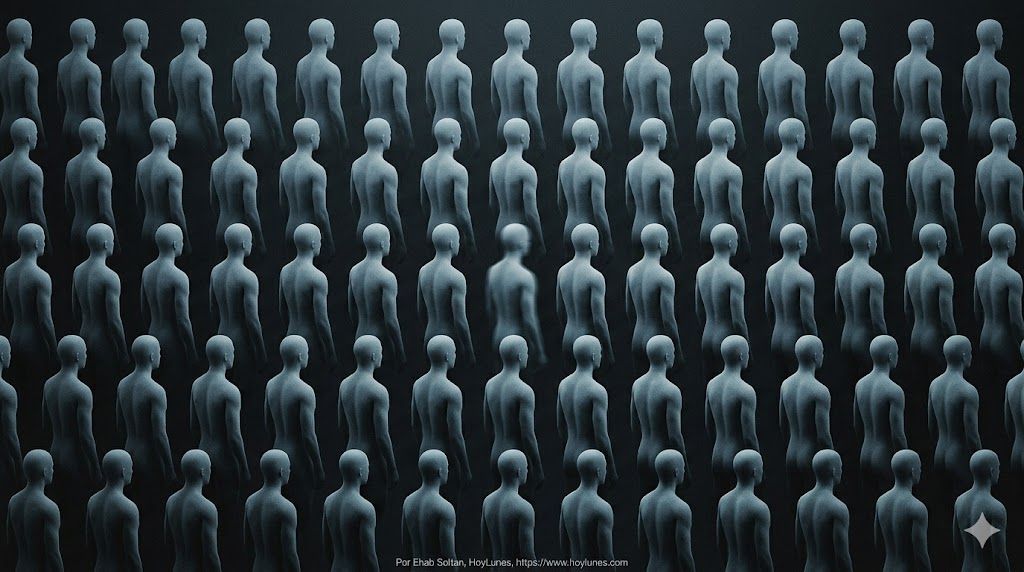
The Paradox of Coherence
Here arises the fracture we have all felt: you can want to change with absolute sincerity, with tears in your eyes, and yet, five minutes later, repeat exactly the same thing.
It is not a contradiction. It is internal coherence.
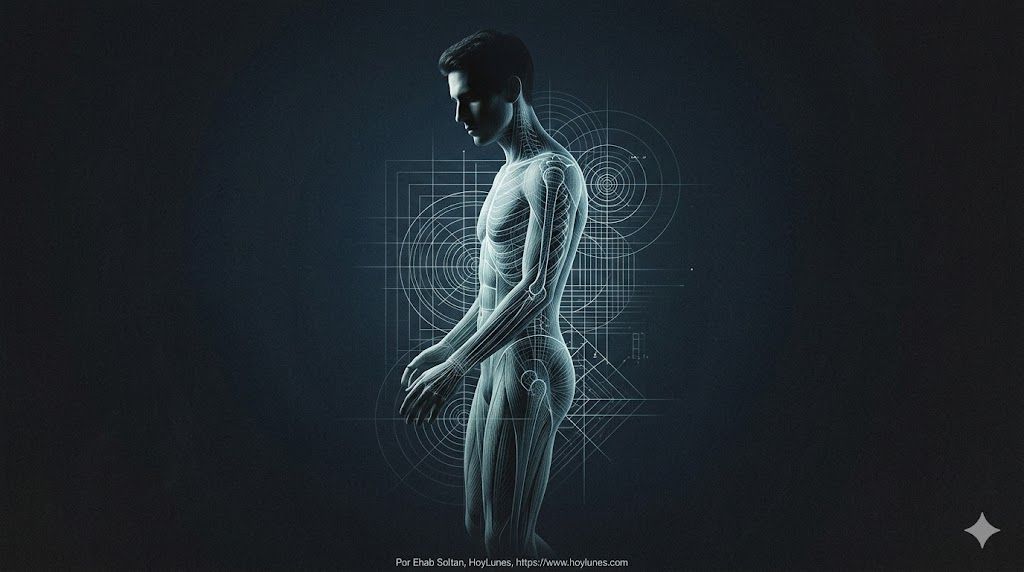
Your intention belongs to the conscious layer, but your execution belongs to the invisible architecture that organizes your muscles before your mind even verbalizes the desire. The action arrives with the sensation of choice… but without having chosen. You find yourself procrastinating. You find yourself giving up.
If we try to correct the isolated “decision”, we are pruning the leaves of a tree whose roots remain intact. The failure is not in the branch; it is in the model that predicts that this is the only way to exist.
The Cost of Unpredictability
Change, in this light, stops being a matter of “motivation”. It becomes something much more uncomfortable: ceasing to be predictable to oneself.
And that has a biological price. It implies entering a territory where the brain loses its precious efficiency. Where every gesture demands extra energy because it is not automated. Where uncertainty generates a stress signal.
It is not a clean process, nor a motivating one. That is why insisting on “having more willpower” usually fails: you are trying to change the result without altering what produces it. It is a constant friction against the nature of the system. The system prefers a known error to a truth yet to be discovered.
And yet, if this is true, it also implies something uncomfortable but useful: that which is executed automatically today… can cease to be so.
And perhaps that is the true starting point: not trying to decide better… but to stop living as if you had already decided. In the end, the question is not how much discipline you think you have, nor what goals you have written on a piece of paper. The question is different, more silent and piercing:
How many of the decisions you think you are making today… were already in motion before you even had the chance to think about them?
#Neuroscience #Habits #RealHealth #PredictiveProcessing #EhabSoltan #HoyLunes